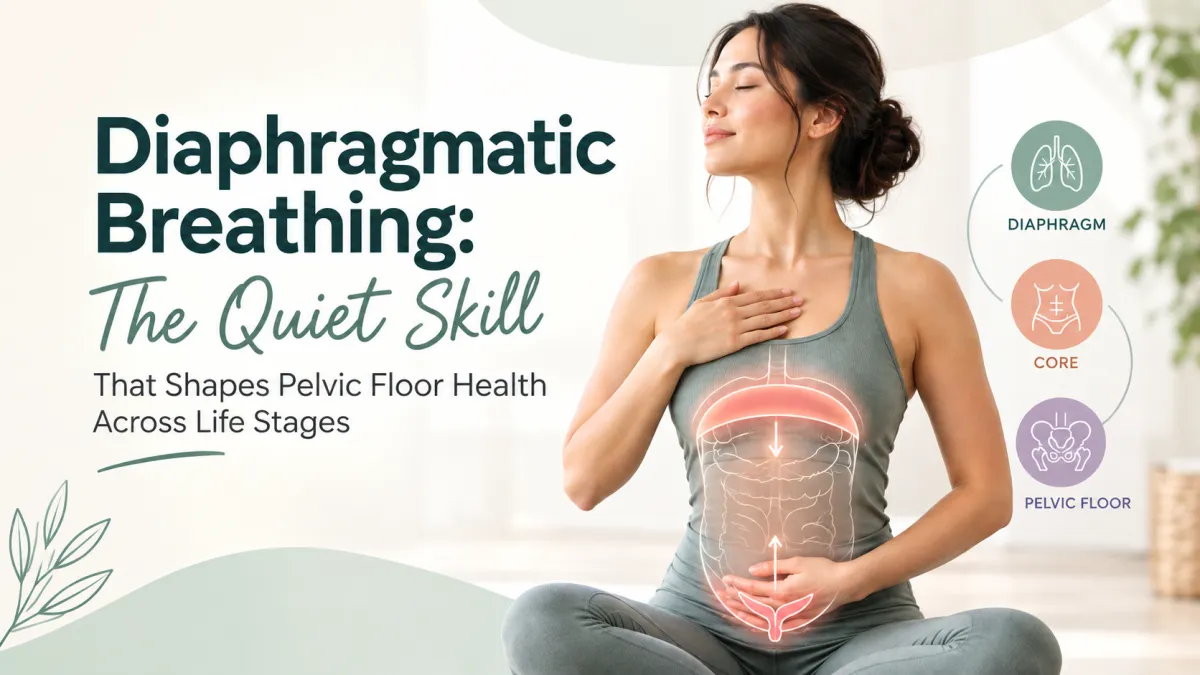
Diaphragmatic Breathing: The Quiet Skill That Shapes Pelvic Floor Health Across Life Stages
Diaphragmatic Breathing: The Quiet Skill That Shapes Pelvic Floor Health Across Life Stages
If pelvic floor health had a main character that isn’t talked about enough, it might be your breath. More specifically, your diaphragm. No, not that kind of diaphragm. We’re talking about the anatomical one.
Although, both the respiratory muscle and the birth control method do share a similar dome shape and etymology. Both uses of the word are derived from the Greek word diaphragma, which means "partition.” Cue Beyonce. While the muscle is named a "diaphragm" because it acts as a physical partition separating the chest from the abdomen, the contraceptive device is named a "diaphragm" because it acts as a physical partition separating the vagina from the cervix.
Diaphragmatic breathing, sometimes called “360 breathing” or “belly breathing,” isn’t just a relaxation tip. It’s a mechanical strategy that helps regulate pressure, coordinate the core, and influence how your pelvic floor moves. If that sounds like it plays a huge role in your overall health, it sure does! Whether you’re a teen navigating periods, an athlete lifting weights, pregnant and feeling like your lungs are being stored in your armpits, or in midlife thinking about leakage, prolapse, or pelvic pain…you might need to consider your relationship with your diaphragm.
At Practically Perfect Physical Therapy, we teach diaphragmatic breathing because it’s one of the simplest ways to restore coordination between the diaphragm, abdominal wall, and pelvic floor, a relationship that has real implications for continence, support, pain, and function.
What is diaphragmatic breathing?
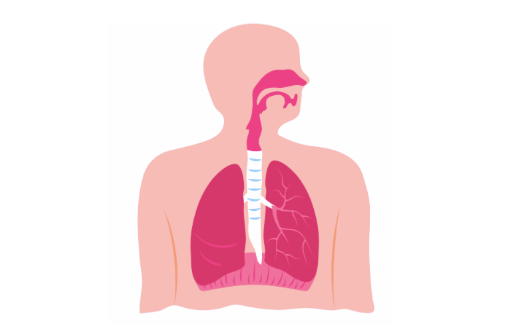
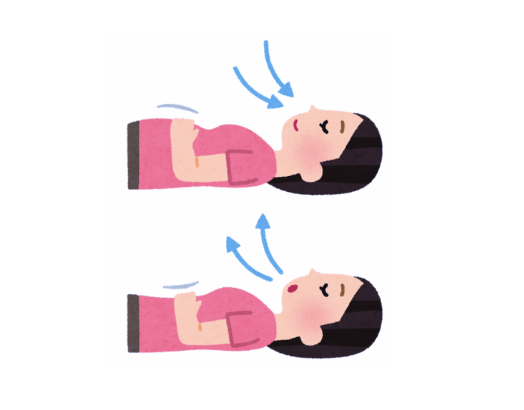
The diaphragm is a dome-shaped muscle that separates your chest and abdomen. When you inhale, the diaphragm contracts and descends, creating space for the lungs to expand. When you exhale, it relaxes and rises.
Your pelvic floor (which all humans have—regardless of sex, gender identity, or reproductive anatomy) behaves like the–you guessed it–floor of this pressure system. Research suggests pelvic floor muscles contribute to respiratory function and postural control, supporting the idea that breathing and pelvic floor function are linked.
A useful way to picture this is as a pressure canister:
Top: diaphragm
Sides: abdominal wall (including deep abdominals)
Bottom: pelvic floor
When this system is coordinated, pressure is managed efficiently during everyday life and higher-demand tasks (coughing, lifting, running, pushing a stroller uphill while carrying a latte you refuse to spill, etc.).
Why breathing mechanics matter for pelvic floor health
Your pelvic floor’s job isn’t just to be strong. It needs to:
lengthen and descend when appropriate (often on inhale)
recoil and gently lift when appropriate (often on exhale)
respond to pressure changes (coughing, laughing, lifting, jumping) without clenching 24/7
A 2022 review, Breathing, (s)training and the pelvic floor—A basic concept, discusses pelvic floor muscles acting in synergy with breathing and abdominal muscles, emphasizing the pelvic floor’s role in pressure regulation.
Clinically, we see diaphragmatic breathing help people who are dealing with:
pelvic pain and muscle hyperactivity (where relaxation is the missing piece)
urinary urgency/frequency (nervous system + pressure regulation)
constipation/straining patterns (coordination + pressure management)
postpartum recovery (rebuilding coordination without gripping)
prolapse symptoms (pressure direction + breath strategy during effort)
Important nuance: breathing exercises alone aren’t a replacement for pelvic floor muscle training when true weakness/endurance deficits exist, but they can be a valuable coordination tool and a gateway to better motor control.
Visualize it: correct vs. incorrect diaphragm motion
A lot of people think they’re “belly breathing” when they’re actually doing one of these common compensation patterns.
What “correct” diaphragm motion tends to look/feel like
On an inhale:
ribs gently expand outward and back (360 expansion)
belly may rise slightly
pelvic floor softens/lengthens (think: “dropping,” not pushing)
shoulders stay quiet
On an exhale:
ribs narrow back down
abdominal wall gently firms without sucking in
pelvic floor recoils/lifts subtly (not a hard clench)
Visualization cue:
Imagine a jellyfish: inhale = the dome opens and pressure spreads; exhale = it recoils back to center.
What “incorrect” patterns often look/feel like (and why they matter)
1) Chest-only breathing (upper rib + shoulder breathing)
shoulders lift, neck/upper traps work overtime
rib cage barely expands
Why it matters: less diaphragm excursion can reduce the natural massage and pressure rhythm that supports pelvic floor coordination; it also often keeps the body in a higher-alert state.
2) “Belly push” breathing
belly aggressively pushes forward
pelvic floor bears down instead of lengthening softly
Why it matters: this can increase downward pressure and may aggravate prolapse symptoms, heaviness, or pain in some bodies.
3) Breath-holding / Valsalva (especially during effort)
inhale…hold…strain/lift
Why it matters: breath-holding spikes intra-abdominal pressure, and if the pelvic floor can’t respond appropriately, people often experience leakage, heaviness, pain flares, or worsening symptoms during lifting and transitions.
4) Constant “core gripping” (sucking in all day)
belly pulled in tightly, limited rib movement
Why it matters: chronic bracing can reduce diaphragm movement and keep the pelvic floor on all the time, something we commonly see with pelvic pain and urgency.
What can happen if you don’t breathe mechanically well?
Not everyone with imperfect breathing develops pelvic floor dysfunction, but poor mechanics can contribute to problems, especially when combined with load, stress, hormonal changes, pregnancy/postpartum, or repetitive straining.
Common issues we see linked to unhelpful pressure strategies include:
urine leakage with cough/laugh/jump/lift (pressure spikes + timing issues)
pelvic heaviness/prolapse symptoms (pressure direction + support demands)
pelvic pain (overactivity/clenching + nervous system sensitization)
constipation and incomplete emptying (straining + poor coordination)
back/hip tension (core system working inefficiently)
shortness of breath/anxiety loop (upper-chest breathing feeding threat physiology)
Pelvic floor muscles have documented roles in postural and respiratory functions, supporting the idea that changes in breathing mechanics can influence pelvic floor demands.
Why it gets harder during pregnancy
Pregnancy changes the mechanics of breathing in a way that is both normal and… rude.
As the uterus grows, the diaphragm is pushed upward (elevated), and lung volumes such as functional residual capacity decrease. Pregnancy also changes the way the rib cage expands: chest wall expansion shifts toward the rib cage because of altered coupling between abdominal pressure and the lower ribs.
Practical consequences:
it may feel harder to take a deep breath “into the belly”
rib expansion becomes more important than belly expansion
baseline intra-abdominal pressure is higher, so the pelvic floor is under more constant load
people often compensate with more chest/neck breathing or more bracing
This is why prenatal breath work is less about big belly breaths and more about rib mobility + pressure direction + pelvic floor softness.
Breathing + pelvic floor needs across life stages
Teens and young adults
Breathing habits often shift with posture (phones), stress, sports, and body image. This stage is a great time to learn that the core is about coordination, not constant tightness.
Athletes and lifters
Performance often rewards breath strategies, but not all breath strategies are pelvic-floor-friendly all the time. Learning when to brace, when to exhale through effort, and when not to max strain can reduce leakage and heaviness with high impact or heavy lifting.
Pregnancy and postpartum
In pregnancy, breathing is mechanically altered; postpartum, people often continue bracing, holding their breath, or guarding. Early postpartum breath work can be a gentle way to reconnect to proper mechanics.
Perimenopause/menopause and aging
Hormonal changes can affect tissue elasticity and symptom patterns (dryness, urgency, prolapse symptoms). Layer in strength training and breathing strategies and you get a strong foundation: bones, bladder, bowel, and core all benefit when pressure is managed well.
Tips and tricks to engage your core & pelvic floor so you can breathe well
The goal isn’t to turn breathing into homework. It’s to make it functional.
1) Start with position: make it easy
Try one of these:
hooklying (on your back, knees bent, feet on the floor)
sidelying
hands-and-knees (often great for pelvic floor relaxation)
supported child’s pose or supported deep squat (if comfy for you)
2) Use a 360° rib cue (not just belly)
Place your hands around your lower ribs like a big hug.
Inhale: feel ribs expand into your hands (front, sides, and back)
Exhale: feel ribs narrow, like Mary Poppins’s umbrella closing
3) Pair pelvic floor with breath—gently
Inhale: soften the pelvic floor (imagine it widening like a trampoline)
Exhale: gently lift (think elevator to the third floor, not the penthouse)
If you have pelvic pain or symptomatic hypertonic pelvic floor, your priority may be learning the inhale softening first.
4) Exhale on effort (the anti-leak strategy)
For lifting, standing, getting out of the car, picking up your 2-year-old nephew:
start exhaling before the effort
keep the exhale going through the hardest part
This helps manage pressure spikes.
5) Avoid the two extremes: no core vs. all core
Common coaching mistakes:
“Relax everything” (unstable, feels unsafe)
“Brace as hard as possible” (pressure overload)
Instead: gentle abdominal engagement + coordinated, balanced breath.
6) A quick self-check: “Can I breathe while I’m braced?”
If your brace shuts off your breath entirely, it’s probably too much for the task.
A simple daily practice (2 minutes)
Choose hooklying or sidelying.
Inhale through the nose for ~4 seconds: ribs widen 360, pelvic floor softens.
Exhale through pursed lips for ~6 seconds: ribs narrow, belly gently firms, pelvic floor recoils.
Repeat 6–8 rounds.
If this increases your symptoms (pain, pressure, dizziness), stop and get individualized guidance from your physical therapist.
📞 Call or text us: (609) 300-3963
📍 Visit us at Practically Perfect Physical Therapy in Galloway, NJ
💻 See our services at www.practicallyperfectpt.com
📲 Follow us on Facebook & @PracticallyPerfect.PT on Instagram
References
American Physical Therapy Association Pelvic Health. Why diaphragmatic breathing is one of the best exercises pelvic health therapists can give patients. Retrieved January 19, 2026, from https://www.aptapelvichealth.org/info/why-diaphragmatic-breathing-is-one-of-the-best-exercises-pelvic-health-therapists-can-give-patients
Hodges, P. W., & Sapsford, R. (2007). Postural and respiratory functions of the pelvic floor muscles. Neurourology and Urodynamics, 26(3), 362–371. https://pubmed.ncbi.nlm.nih.gov/17304528/
LoMauro, A., & Aliverti, A. (2015). Respiratory physiology of pregnancy: Physiology masterclass. Breathe, 11(4), 297–301. https://pmc.ncbi.nlm.nih.gov/articles/PMC4818213/
Talasz, H., Kofler, M., Kalchschmid, E., & Lechleitner, M. (2022). Breathing, (s)training and the pelvic floor—A basic concept. International Journal of Environmental Research and Public Health, 19(12), 7061. https://pmc.ncbi.nlm.nih.gov/articles/PMC9222935/
